
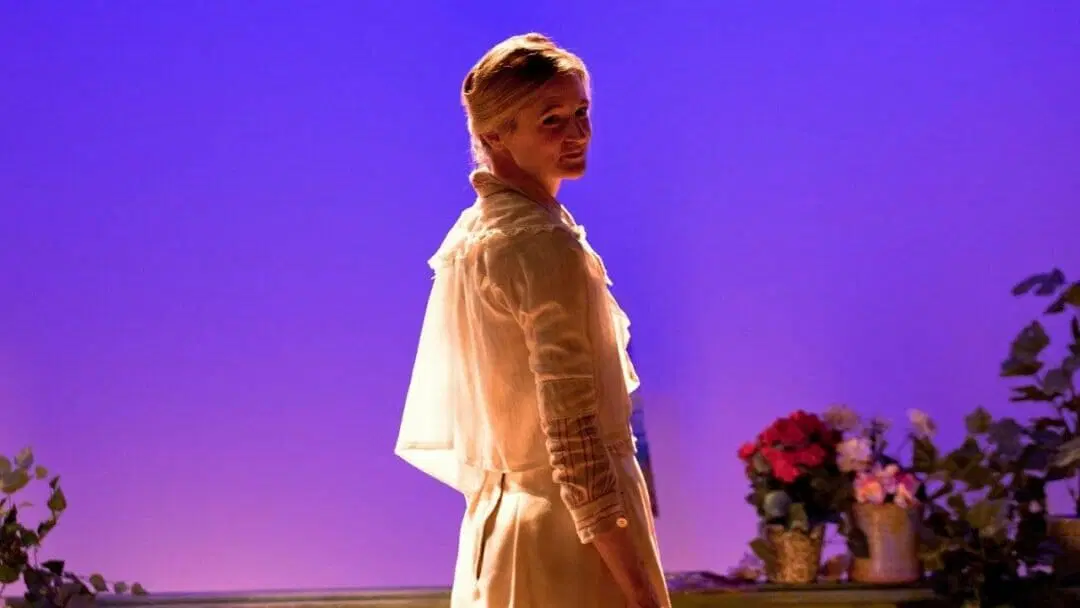
Naomi Frederick is precisely the kind of performer that the British theatrical establishment produces at its most serious and most demanding — a woman who read English Literature at Oxford, trained at the Royal Academy of Dramatic Art, won the Ian Charleson Award for classical acting, played leading roles at the National Theatre under Nicholas Hytner and Simon McBurney, spent eleven months in Kneehigh’s celebrated Brief Encounter at the Haymarket, performed Shakespeare at the Globe in India, and has carried across two decades of professional work a quality of intelligence, precision, and genuine commitment to the text that makes every production she appears in measurably better. Her screen career — which includes The Children Act, The Aftermath, Belgravia, Industry, and now Emily Forsyte across all six episodes of The Forsytes on Channel 5 and PBS Masterpiece — has always been secondary in her own professional priorities to the theatre, and the theatre has rewarded that loyalty with the kind of career that speaks for itself.
Biography / Wiki Table
| Detail | Information |
| Full Name | Naomi Frederick |
| Date of Birth | November 29, 1976 |
| Age (2025) | 48 years old |
| Place of Birth | Iserlohn, West Germany (born due to father’s British military posting) |
| Raised In | Nomadic — army child; moved frequently throughout childhood |
| Nationality | British |
| Ethnicity | White British |
| Father | British military officer (stationed in West Germany at time of birth) |
| Upbringing | “Army child” — multiple relocations throughout childhood |
| University | St Hilda’s College, Oxford — BA English Literature |
| Drama School | Royal Academy of Dramatic Art (RADA) |
| Representation | Conway Van Gelder Grant (Nicholas Gall); CVGG Ltd |
| Theatre Training | RADA (post-Oxford) |
| Oxford Distinction | Appeared in many student productions at Oxford |
| First Major Award | Most Promising Newcomer — Manchester Evening News Theatre Awards (2003) |
| Ian Charleson Award | Second Prize — 2005 (for Measure for Measure at National Theatre) |
| Defining Stage Roles | Isabella — Measure for Measure (NT, 2006); Rosalind — As You Like It (Globe); Sor Juana — The Heresy of Love (Globe); Laura — Brief Encounter (Kneehigh, Haymarket) |
| Key Theatres | National Theatre; Shakespeare’s Globe; Jermyn Street Theatre; Kiln Theatre; Park Theatre; Haymarket |
| TV Debut | Foyle’s War (2002) |
| Key Screen Credits | The Children Act (2017), The Aftermath (2019), Belgravia (2020), Industry (BBC), The Forsytes (2025) |
| The Forsytes Role | Emily Forsyte — The Forsytes (Channel 5 / PBS Masterpiece, 2025) — all 6 episodes |
| Radio | BBC Radio — Twelfth Night (2012), Sparkling Cyanide (2012) |
| Audiobooks | Active narrator |
| Video Game | Total War: Rome II (2013 — voice) |
| Alternative Careers Considered | Translator, teacher, voice coach, graphic designer, landscape gardener, speech therapist |
| Favourite Writers | Shakespeare, Chekhov, Coward, Alan Bennett, Helen Edmundson, Tom Stoppard, Christopher Shinn |
| Favourite Novelists | Nabokov, Jonathan Safran Foer, Helen Garner, Rohinton Mistry |
| Career Idol | Eileen Atkins |
| IMDb | nm1164621 |
Early Life: Born in West Germany, Raised as an Army Child
Naomi Frederick was born on November 29, 1976, in Iserlohn — a city in the North Rhine-Westphalia region of West Germany — a birthplace that was entirely a function of circumstance rather than heritage. Her father was a British military officer posted in West Germany at the time of her birth, and the family’s subsequent life followed the pattern of service families everywhere: regular relocations, successive new schools and communities, the particular combination of adaptability and rootlessness that is the defining characteristic of what she has described as an “army child” upbringing.
That upbringing — nomadic, constantly adjusting to new environments and new social groups — shaped something in her that would prove professionally invaluable. The ability to read a room quickly, to find common ground with unfamiliar people, to adapt one’s register and approach to the specific demands of each new context, are exactly the skills that a serious character actor develops through years of craft. Naomi Frederick began developing them in childhood, through necessity. The craft training she would eventually receive at RADA and through decades of professional theatre gave her the technical foundation. But the fundamental human adaptability — the capacity to inhabit different worlds convincingly — was built earlier, in the succession of new towns and new schools that her father’s service career produced.
She has spoken with characteristic lightness about the alternative careers she has considered over the years — translator, teacher, voice coach, graphic designer, landscape gardener, speech therapist — the list of someone whose intellectual curiosity and practical versatility make multiple paths seem genuinely appealing. The fact that she mentions considering career switches even at the height of her professional theatrical success is both endearing and revealing: it speaks to someone who values the activity and meaning of work itself, not merely the identity of being an actress.
Oxford and RADA: The Double Education
The educational journey of Naomi Frederick is one that is less common in British acting than it once was — and more common in the specific subset of the profession that produces the most intellectually rigorous and technically accomplished classical performers. She read English Literature at St Hilda’s College, Oxford — one of the oldest of the original women’s colleges at one of the world’s great universities, with a distinguished history of producing scholars and writers of significant achievement.
Reading English Literature at Oxford is, for an aspiring actress, a specific kind of preparation for the work of inhabiting great texts. It builds the capacity to engage with language at the level of the sentence, to understand the relationship between form and meaning, to bring the rigour of literary analysis to the question of how a character speaks and what the specific words chosen reveal about their inner life. The Oxford English course demands wide reading, independent thinking, and the ability to synthesise complex ideas across centuries of literary tradition — exactly the kind of mental training that distinguishes the most intellectually grounded performers from those who arrive at the text with craft alone.
She appeared in many student productions at Oxford during her undergraduate years — the student drama scene at Oxford has historically been one of the most active and most seriously regarded outside the professional theatre world — and graduated with the literary foundation in place. She then attended the Royal Academy of Dramatic Art — RADA — to build the technical craft on top of the intellectual foundation. RADA’s training is among the most rigorous in the world: the school’s alumni list represents an extraordinary proportion of the most significant British theatrical and film performers across the past century, and the specific combination of voice, movement, classical acting technique, and professional discipline that it develops is visible in the work of its graduates across their entire careers.
The Oxford and RADA combination — literary intelligence plus technical craft plus the specific adaptability of the army childhood — produced exactly the performer that the next three decades of professional theatre work would reveal.
The Ian Charleson Award and the National Theatre
The formal industry recognition that first established Naomi Frederick as a classical stage actress of serious distinction came in 2005, when she won second prize at the Ian Charleson Awards — the annual prize awarded to the best classical performances by British actors under the age of thirty in a professional production.
The Ian Charleson Awards are, within the specific world of British classical theatre, among the most respected recognitions available to a young performer. Named after the Scottish actor whose career was cut short by AIDS-related illness in 1990, the awards are administered by the National Theatre and judged by a panel of theatre practitioners and critics. Previous winners and runners-up include a remarkable proportion of the most significant classical actors of the past three decades, and winning or placing in them is a meaningful signal to the profession about the quality of a performer’s classical work.
Her second prize came for her portrayal of Isabella in Measure for Measure — William Shakespeare’s most morally complex comedy, about a novice nun who must navigate a powerful official’s demand for sexual compliance in exchange for her brother’s life. The production was performed at the National Theatre’s Lyttelton stage in 2006, directed by Simon McBurney — one of the world’s most respected and most innovative theatre directors, founder of the physical theatre company Complicite. Playing Isabella in a McBurney-directed production at the National was already, before the Charleson recognition, one of the most significant professional contexts a young actress could inhabit. The award made it one of the most formally recognised as well.
She has described the role as her first big break — the production that announced her to the professional theatre world as someone to be taken seriously. The Measure for Measure production subsequently toured internationally, including performances in India — an experience she described in her WhatsOnStage interview as thrilling, and as one of the genuine highlights of her professional life. Playing Shakespeare in India, in front of audiences for whom the text arrives without the specific cultural familiarity that English audiences bring, is a particular kind of theatrical experience — one that strips the play back to its fundamental human content and demands the most direct and honest possible connection between performer and audience.
She also performed Lady Percy in Henry IV Parts 1 and 2 at the National Theatre in 2005, directed by Nicholas Hytner — whose tenure as Artistic Director of the National from 2003 to 2015 is widely considered one of the most distinguished in the institution’s history.
Shakespeare’s Globe: Rosalind, Hero, and Sor Juana
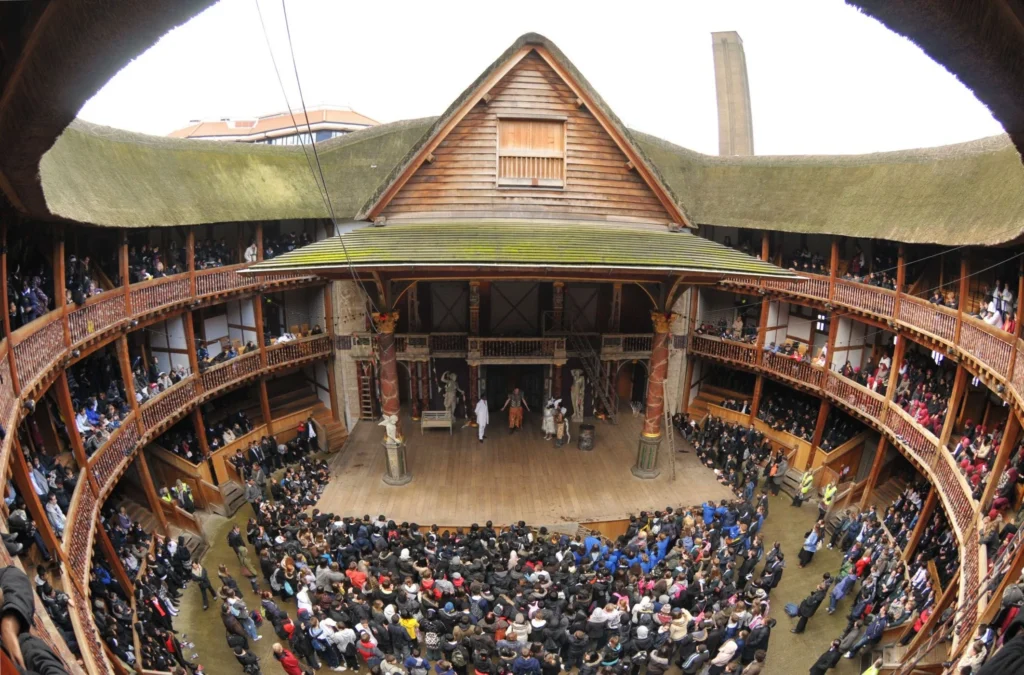
Naomi Frederick’s relationship with Shakespeare’s Globe Theatre — the reconstructed Elizabethan playhouse on the South Bank of the Thames, built as close as possible to the site of the original Globe where Shakespeare’s company performed — is one of the defining strands of her stage career, and the one that has produced some of her most publicly visible and most critically praised performances.
She played Rosalind in As You Like It — one of Shakespeare’s greatest and most demanding comic heroines, whose disguise plot, witty intelligence, and capacity for genuine romantic feeling require a performer of both technical command and natural warmth — at Shakespeare’s Globe, with the production subsequently released as a filmed record that remains available and has introduced her performance to audiences beyond the Globe’s own theatregoing public.
She played Hero in Much Ado About Nothing — the romantic comedy’s more conventionally innocent heroine, whose apparent simplicity conceals genuine dignity and moral courage — at the Globe in another production that extended her range within the Shakespeare canon.
And she played Sor Juana in The Heresy of Love — Helen Edmundson’s play about the seventeenth-century Mexican poet and scholar Juana Inés de la Cruz, whose intellectual brilliance and theological daring placed her in conflict with the Inquisition — at Shakespeare’s Globe in 2015. The Heresy of Love is a play about a woman who insists on the right to think and write and know, in a world determined to silence her — a role whose combination of intellectual passion and physical containment is extraordinarily demanding, and one that drew on every dimension of the Oxford-educated, RADA-trained classical actress that Naomi Frederick had built herself into across the preceding twenty years.
Brief Encounter: Eleven Months at the Haymarket
Among the stage credits that Naomi Frederick has described as most treasured is her portrayal of Laura in Kneehigh’s Brief Encounter — the theatre company’s celebrated adaptation of Noël Coward’s screenplay and David Lean’s 1945 film, a production that combined live performance, film sequences, and the specific emotional intensity of Coward’s story of restrained, unfulfilled romantic longing.
The production ran at the Cinema at the Haymarket — a beautifully adapted West End venue — for eleven months, a run of exceptional length for a non-commercial, artistically ambitious production. Eleven months in a single role, performing the same story eight times a week for an audience many of whom had seen the original film and brought specific expectations to the stage version, demands a quality of sustained emotional commitment and technical discipline that very few productions ask of their performers.
She has described the eleven months in Brief Encounter as one of the career highlights she most values — a statement that speaks to someone who understands that the richest professional experiences are not always the most visible or the most commercially celebrated, but the ones that demand the most complete immersion in a human story and the most honest connection with an audience.
The Haymarket, Jermyn Street, Kiln Theatre, and Park Theatre
The range of London theatre spaces in which Naomi Frederick has performed across her career is itself a map of the serious working British stage — from the largest and most institutional to the most intimate and most artistically adventurous.
The Haymarket is one of London’s oldest and most historically significant West End theatres, whose programme has always been among the most prestigious in British commercial theatre. The National Theatre’s Lyttelton stage, where she played Isabella and Lady Percy, is one of the National’s three main auditoria, whose productions are among the most carefully watched and most fully resourced in British theatrical life.
Jermyn Street Theatre — where she appeared in Agnes Colander, a production that received warm critical notices for her central performance — is one of London’s most admired fringe venues: a small basement space in St James’s whose programme consistently exceeds its physical scale in artistic ambition and quality. The Kiln Theatre in Kilburn — where she played the younger Margaret Thatcher in the 2022 revival of Moira Buffini’s Handbagged, directed by Indhu Rubasingham — is one of North London’s most socially engaged and politically alert theatrical spaces, whose commitment to new writing and diverse voices has made it among the most discussed and respected mid-scale theatres in London.
Park Theatre — where she appeared in The Interview in 2023, playing Luciana alongside a character representing Princess Diana in a speculative drama about Diana’s final hours, directed by Michael Fentiman — is another of London’s most respected mid-scale new writing spaces.
The breadth of this theatrical geography — from the National to the Haymarket to Jermyn Street to the Kiln to Park Theatre — reflects a performer whose professional choices are driven by the quality of the work rather than the size of the stage or the commercial profile of the production.
Screen Work: The Children Act, The Aftermath, Belgravia, and Industry
While the theatre has always been the primary focus of Naomi Frederick’s professional identity, her screen work has accumulated across two decades into a body of credits that demonstrates her capacity for the specific demands of film and television performance — the complete internal truthfulness, the economy of means, and the ability to work within the temporal and spatial constraints of the camera that distinguish great screen acting from great stage acting.
Her television debut came in 2002 with Foyle’s War — ITV’s acclaimed wartime detective drama starring Michael Kitchen — in an early guest appearance that placed her professional television career on a quality foundation from its very first credit.
Her 2003 Most Promising Newcomer Award at the Manchester Evening News Theatre Awards documented the early recognition of her stage work in the years before the Charleson Award, and speaks to a performer who was building a serious reputation in regional and fringe theatre simultaneously with her London work.
She appeared in My Family — the BBC sitcom — across three episodes between 2002 and 2011, adding a light comedy credit to a profile otherwise largely defined by classical seriousness. She appeared in Holby City, Casualty, and EastEnders at various points — the soap and medical drama credits that form part of the professional record of the working British screen actress at every stage of a career.
The Children Act (2017) — Richard Eyre’s film adaptation of Ian McEwan’s novel, starring Emma Thompson as a High Court judge navigating a complex legal and moral dilemma — placed her in a production of genuine literary prestige and gave her Amanda, a supporting role in a film whose serious engagement with questions of law, medicine, and human dignity reflected exactly the kind of intellectually demanding material she gravitates toward.
The Aftermath (2019) — James Kent’s post-World War II drama starring Keira Knightley and Alexander Skarsgård, set in Hamburg in 1946 — gave her Celia, a supporting role in a film whose period setting and emotional complexity offered the kind of period drama experience that her stage work in classical theatre had prepared her to inhabit with ease and precision.
Belgravia (2020) — Julian Fellowes’s ITV period drama adapted from his own novel, set in the Victorian era — cast her as the Duchess of Bedford across two episodes, placing her in one of the most prestigious period drama productions of its year and alongside a cast that included Tamsin Greig, Ella Purnell, and Philip Glenister.
Her appearance in Industry — the BBC / HBO drama about young graduates navigating the brutal world of a London investment bank, which has been praised as one of the most electrically written British dramas of recent years — as Katherine Brownlow extended her screen profile into one of the most discussed contemporary British productions of the period.
| Key Screen Credits | Year | Role | Type |
| Foyle’s War (ITV) | 2002 | Guest | TV Drama |
| Trial of Tony Blair (Channel 4) | 2007 | — | TV Film |
| My Family (BBC) | 2002–2011 | 3 episodes | TV Sitcom |
| On Expenses (BBC) | 2010 | Personal Assistant | TV Film |
| As You Like It — Globe (filmed) | 2010 | Rosalind | Stage/Film |
| Doctors (BBC) | 2010 | Laura Birks | TV Drama |
| Casualty (BBC) | 2013 | Grace Fraser | TV Drama |
| Total War: Rome II | 2013 | Voice | Video Game |
| The Children Act | 2017 | Amanda | Film (Richard Eyre / Emma Thompson) |
| Inspector George Gently (BBC) | 2017 | Adele Watson | TV Drama |
| The Aftermath | 2019 | Celia | Film (Keira Knightley) |
| Belgravia (ITV) | 2020 | Duchess of Bedford | TV Drama (2 eps) |
| EastEnders (BBC) | 2020 | Dr. Baise | TV Soap |
| Father Christmas Is Back | 2021 | Paulina Christmas | Film |
| National Theatre Live: Book of Dust | 2022 | Dr. Hannah Relf | NT Live |
| Industry (BBC / HBO) | 2023 | Katherine Brownlow | TV Drama |
| The Forsytes (Channel 5) | 2025 | Emily Forsyte | TV Drama (6 eps) |
| The Game (ITV) | 2025 | Coroner | TV Drama |
| 260 Days | 2025 | Vukica | TV Limited Series |
Radio, Audiobooks, and the Full Range of Performance Media
One of the dimensions of Naomi Frederick’s professional identity that extends her practice well beyond the stage and screen is her radio and audiobook work. She has appeared in BBC Radio drama adaptations — including Twelfth Night and Sparkling Cyanide in 2012 — that demand the specific technical skills of pure vocal performance: the ability to convey character, emotion, and narrative entirely through voice, without the physical presence and visual context that stage and screen performance can rely upon.
She has also worked as an audiobook narrator — bringing to recorded literary text the combination of vocal intelligence and emotional intelligence that her RADA training and Oxford literary education developed. Audiobook narration of quality literary fiction or drama requires exactly the qualities that her professional formation produced: the ability to sustain a listener’s attention across hours of spoken text, to differentiate characters through voice alone, and to serve the author’s intentions while making the work genuinely alive in the listener’s imagination.
The video game credit — voicing characters in Total War: Rome II (2013), the strategy game set in the ancient Roman world — adds another dimension to a professional media range that encompasses stage, film, television, radio, audiobook, and interactive entertainment.
The Forsytes (2025): Emily Forsyte and a Career Full Circle
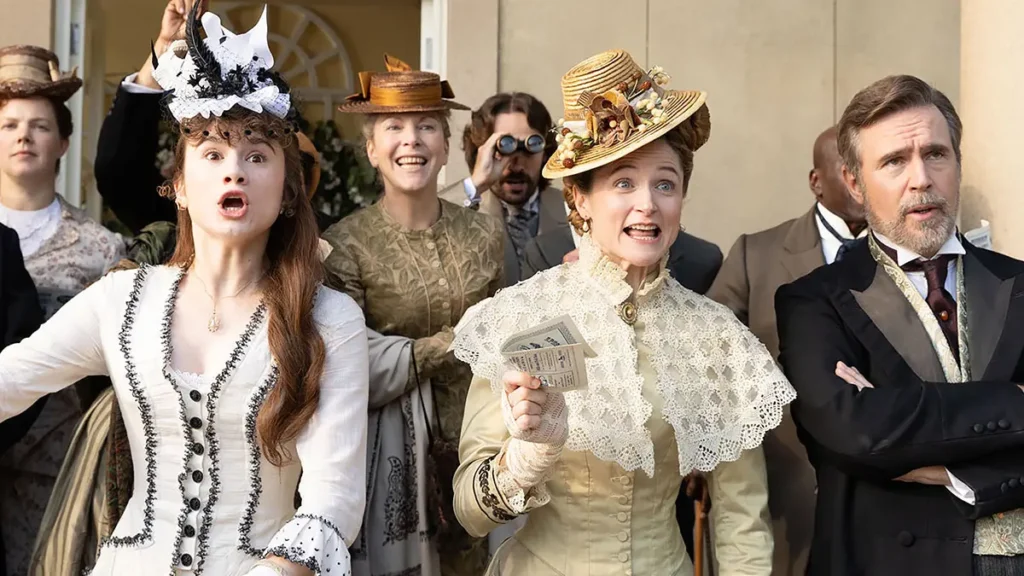
The most recent and most significant of Naomi Frederick’s screen credits is Emily Forsyte in The Forsytes — the six-part period drama adaptation of John Galsworthy’s Nobel Prize-winning Forsyte Saga novels, produced by Mammoth Screen for Channel 5 and PBS Masterpiece, written by Poldark screenwriter Debbie Horsfield. She appears across all six episodes, making Emily Forsyte one of her most sustained single screen commitments.
Emily Forsyte — the matriarchal wife of James Forsyte, mother of Soames — is a character whose position within the Forsyte family’s social architecture carries considerable weight. Emily is the practical emotional manager of the James Forsyte household, the woman whose social intelligence and domestic authority shape the environment in which the saga’s central conflicts play out. For an actress of Naomi Frederick’s specific gifts — the Oxford-trained literary intelligence, the RADA technical precision, the twenty years of inhabiting complex period women on stage — the role is one that draws on exactly what her career has built.
The Forsytes premiered on Channel 5 in the United Kingdom on October 20, 2025, and is scheduled for its American premiere on PBS Masterpiece on March 22, 2026. A second season was commissioned before the first had even aired.
She joins an ensemble that represents the full breadth of contemporary British screen and stage talent:
| The Forsytes Ensemble | Role | Known For |
| Francesca Annis | Ann Forsyte | Flesh and Blood, Lillie |
| Stephen Moyer | Jolyon Forsyte Sr. | True Blood, The Gifted |
| Jack Davenport | James Forsyte | The Morning Show, Ten Percent |
| Danny Griffin | Jo Forsyte Jr. | Fate: The Winx Saga, The Gentlemen |
| Tuppence Middleton | Frances Forsyte | Sense8, Downton Abbey, War & Peace |
| Eleanor Tomlinson | Louisa Byrne | Poldark, One Day |
| Joshua Orpin | Soames Forsyte | Titans (HBO Max) |
| Millie Gibson | Irene Heron | Doctor Who, Coronation Street |
| Jamie Flatters | Philip Bosinney | Avatar: The Way of Water |
| Tom Durant-Pritchard | Monty Dartie | Baby Reindeer, Andor |
| Josette Simon OBE | Mrs. Ellen Parker Barrington | Anatomy of a Scandal |
| Susan Hampshire CBE | Lady Carteret | Original 1967 BBC Forsyte Saga |
| Naomi Frederick | Emily Forsyte | Belgravia, The Children Act, The Aftermath |
For Frederick — a performer whose career has been defined above all by the stage, and whose screen credits have always been chosen with a classicist’s care for the quality of the material — the Forsytes represents exactly the kind of prestige literary adaptation that her entire professional formation has been preparing her for. Galsworthy’s characters are, in the tradition of the great nineteenth-century English novels, built for exactly the kind of actor who has spent decades inhabiting great literary texts on stage: performers who bring genuine intelligence to the psychology of period characters, genuine technical command to the specific physical and vocal demands of the Victorian world, and genuine humility before the integrity of a story that has been speaking to audiences for more than a century.
What Naomi Frederick’s Career Represents
The career of Naomi Frederick is a portrait of what sustained commitment to the theatre, at the highest level, looks like across two decades of professional work. It is not the career of a performer who used the stage as a launching pad for film stardom, or who measured success by television visibility or commercial recognition. It is the career of someone who found her truest professional identity in the most demanding and most rewarding context available to a serious British actress — the classical stage — and built within it a body of work that is, by the standards of that world, genuinely distinguished.
Oxford and RADA gave her the intellectual and technical foundation. The Ian Charleson Award and the National Theatre gave her the formal recognition of her classical work’s quality. The Globe, the Haymarket, Jermyn Street, the Kiln, and Park Theatre gave her the breadth of theatrical experience across different scales and different aesthetics that makes a truly complete stage performer. The Children Act, The Aftermath, Belgravia, and Industry gave her screen credits worthy of her stage reputation. And The Forsytes has given her the most prestigious literary screen role of her career — Emily Forsyte in a PBS Masterpiece production of the Nobel Prize-winning saga that her fellow cast member Susan Hampshire first brought to worldwide attention fifty-eight years ago.
The army child born in West Germany who might have become a translator or a landscape gardener instead became one of the most quietly distinguished classical actresses of her generation. It is, from any angle, an extraordinary thing to have built.
Career Timeline
| Year | Milestone |
| November 29, 1976 | Born in Iserlohn, West Germany (father’s British military posting) |
| 1976–1994 | Nomadic childhood as army child; multiple relocations across Britain |
| ~1995–1998 | Reads English Literature at St Hilda’s College, Oxford; appears in student productions |
| ~1998–2001 | Trains at Royal Academy of Dramatic Art (RADA), London |
| 2002 | Professional TV debut — Foyle’s War (ITV); My Family (BBC first appearance) |
| 2003 | Wins Most Promising Newcomer — Manchester Evening News Theatre Awards |
| 2005 | Lady Percy — Henry IV Parts 1 & 2 (National Theatre, dir. Nicholas Hytner) |
| 2005 | Wins Ian Charleson Award Second Prize — Measure for Measure (NT) |
| 2006 | Isabella — Measure for Measure (National Theatre Lyttelton, dir. Simon McBurney) |
| 2006–2007 | Measure for Measure world tour including performances in India |
| 2007 | Trial of Tony Blair (Channel 4) |
| ~2008–2009 | Brief Encounter — Laura (Kneehigh Theatre, Cinema at the Haymarket) — 11 months |
| 2010 | Rosalind — As You Like It (Shakespeare’s Globe — filmed and released) |
| 2010–2011 | Further BBC appearances: Doctors, On Expenses, My Family |
| 2012 | BBC Radio drama — Twelfth Night and Sparkling Cyanide |
| 2013 | Casualty (BBC); Total War: Rome II (video game voice) |
| 2015 | Sor Juana — The Heresy of Love (Shakespeare’s Globe, dir. John Dove) |
| ~2013–2016 | Agnes Colander (Jermyn Street Theatre) |
| 2017 | The Children Act (Richard Eyre; Emma Thompson); Inspector George Gently finale (BBC) |
| 2019 | The Aftermath (Keira Knightley; Alexander Skarsgård) |
| 2020 | Belgravia (ITV) — Duchess of Bedford (2 eps); EastEnders (BBC) |
| 2021 | Father Christmas Is Back (film) |
| 2022 | National Theatre Live: The Book of Dust (Dr. Hannah Relf); Handbagged revival — younger Margaret Thatcher (Kiln Theatre, dir. Indhu Rubasingham) |
| 2023 | Industry (BBC / HBO) — Katherine Brownlow; The Interview — Park Theatre (Michael Fentiman) |
| 2025 | Emily Forsyte — The Forsytes (Channel 5 / PBS Masterpiece) — all 6 episodes |
| 2025 | The Game (ITV); 260 Days |
| October 20, 2025 | The Forsytes premieres on Channel 5, UK |
| March 22, 2026 | The Forsytes premieres on PBS Masterpiece, USA |
| 2025–ongoing | The Forsytes Season 2 in production |