
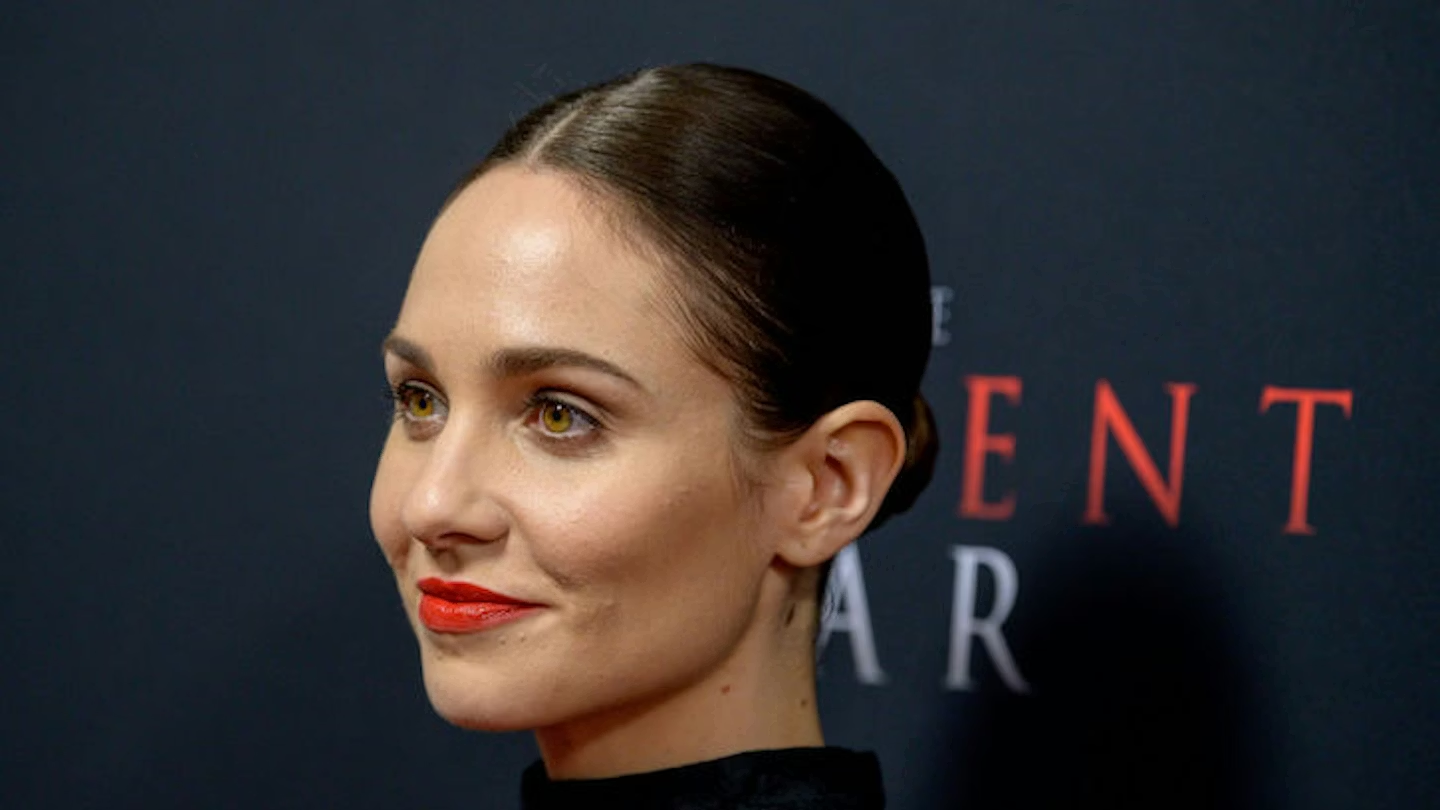
Tuppence Middleton is one of British cinema and television’s most consistently compelling presences — a performer whose combination of classical training, remarkable range, and the ability to disappear completely into a character has taken her from British horror films to Oscar-winning period dramas, from Netflix’s most ambitious science fiction experiment to the grandeur of Downton Abbey, and most recently into one of the most distinguished period drama ensembles assembled for British and American television in years. Named after the pet nickname her grandmother gave her mother, raised in Somerset, trained in London, and now recognised on both sides of the Atlantic as someone the most ambitious productions want in their cast — her story is as quietly extraordinary as the performances that have defined it.
Biography / Wiki Table
| Detail | Information |
| Full Name | Tuppence Amelia Middleton |
| Date of Birth | February 21, 1987 |
| Age (2025) | 38 years old |
| Place of Birth | Bristol, England, UK |
| Raised In | Clevedon, Somerset, England |
| Nationality | British |
| Ethnicity | White British |
| Height | 5 ft 6 in (168 cm) |
| Eye Color | Blue/Grey |
| Hair Color | Dark Brown |
| Father | Nigel Middleton |
| Mother | Tina Sheppard |
| Older Sister | Angel Middleton |
| Younger Brother | Josh Middleton (guitarist/vocalist — Sylosis, Architects) |
| Name Origin | Named “Tuppence” after grandmother’s nickname for her mother |
| High School | Bristol Grammar School (independent day school) |
| Drama Training | Stagecoach, Portishead; Arts Educational School, Chiswick, London (BA Hons Acting) |
| Professional Debut | Bones (Fox/Sky, 2008) |
| First Film | Tormented (2009) |
| Breakthrough Film | The Imitation Game (2014) |
| Breakthrough TV | Sense8 (Netflix, 2015–2018) as Riley Blue |
| Period Drama Credential | War & Peace (BBC, 2016); Dickensian (BBC, 2015–16); Downton Abbey (2019, 2022) |
| Notable Films | The Imitation Game, Jupiter Ascending, Trance, Mank, Possessor, Downton Abbey |
| Notable TV | Sense8, Dickensian, War & Peace, Black Mirror, Spies of Warsaw, Our House, The Forsytes |
| Health | Lives openly with OCD (developed age 12) and emetophobia |
| Theatre | The Living Room (2013, debut); The One (Soho Theatre, 2018) |
| Award | London Evening Standard Film Awards — Most Promising Newcomer nomination (2010) |
| Not Related | Has denied relationship to Catherine, Princess of Wales |
| Net Worth (est.) | Approximately $4 million |
| IMDb | nm3095562 |
Early Life: Clevedon, Somerset — and a Name That Tells a Story
Tuppence Amelia Middleton was born on February 21, 1987, in Bristol — the great port city of the South West of England, one of Britain’s most culturally vibrant and historically significant cities — and raised in the nearby coastal town of Clevedon, Somerset. Clevedon is a Victorian seaside town on the Severn Estuary, known for its pier, its sheltered position between the Somerset hills and the Bristol Channel, and the particular kind of genteel English small-town life that its Victorian architecture and seafront promenade embody.
She grew up in a family that now has, entirely coincidentally, a remarkable musical dimension: her younger brother Josh Middleton is the guitarist and vocalist of the heavy metal band Sylosis and lead guitarist of Architects — two of the most respected bands in the British metal scene. The creative household that produced both a film and television actress of international profile and a metal musician of genuine standing is not something that can be easily explained, but it speaks to a family in which individual artistic ambition was supported and nurtured rather than discouraged.
Her name has its own quietly charming origin story. She was named Tuppence — the old British slang for two pennies — not through any parental whim, but because it was the nickname her grandmother had given to her mother Tina. The naming of a child after a term of endearment passed down through a maternal line is the kind of detail that says something real about a family’s warmth and the value it places on connection across generations.
She has described her younger self as shy and reclusive at school, and relatively loud and brash at home — the classic disposition of a child who has not yet found the environment in which her natural expressiveness has permission to exist publicly. Youth theatre, which she discovered through school productions at Bristol Grammar School and through the Stagecoach performing arts school in Portishead, became that environment. It was, as she has described it, an outlet — a place where confidence was not just permitted but required, and where the quality of your presence in a scene mattered more than your social position in the school hierarchy.
At Bristol Grammar School she appeared in school productions including Guys and Dolls, in which she played the lead role — a significant undertaking for a school production that demands both singing and comedic performance across a full length musical. She also appeared in local drama productions including a pantomime at the Princes Hall in Clevedon alongside her sister Angel.
Arts Educational School: The Foundation That Built the Range
The formal training that would underpin everything Tuppence Middleton has achieved on screen was built at the Arts Educational School in Chiswick, West London — one of the United Kingdom’s most respected drama conservatories, whose alumni include Julie Andrews, Bonnie Langford, and a significant proportion of the working professional actors in British theatre and television. She earned an honours degree in acting from the school, completing a rigorous programme that combined technical craft with the intellectual engagement with text and character that professional screen and stage performance demands.
The Arts Educational School’s particular strength is its combination of classical theatrical training with an understanding of the specific demands of screen performance — the difference between filling a theatre with genuine physical and vocal presence and the complete internal truthfulness that the camera’s unforgiving proximity requires. For a performer whose subsequent career has taken her across period drama, science fiction, psychological horror, and contemporary domestic drama with equal command, the breadth of what the school’s training demanded is visibly reflected in the range of what she has delivered.
She made her first professional screen appearance in 2008, during or shortly after her training, in the American procedural drama Bones — the Fox forensic crime series starring Emily Deschanel and David Boreanaz — a credit that began her professional career on an international production of significant scale before she had even graduated.
First Film Steps: Tormented, Chatroom, and the London Evening Standard Recognition
Tuppence Middleton’s first film role came in 2009 with Tormented — a British horror-comedy set in a secondary school, in which she played Justine Fielding, the head girl whose popular boyfriend and his friends are revealed to have been responsible for a classmate’s death. The film was a modest but genuinely entertaining genre piece that demonstrated, from her first feature film appearance, the combination of poise and unsettling subtlety that would become a recurring quality in her best work.
In 2010, she appeared in Skeletons — the offbeat British fantasy film — and Chatroom, the psychological thriller directed by Hideo Nakata (the Japanese director of Ring), in which she starred alongside Aaron Johnson and Matthew Beard. Chatroom was based on Enda Walsh’s stage play and dealt with online manipulation and adolescent vulnerability — a tonally complex piece of work that placed her in a serious dramatic context requiring genuine craft beyond the genre conventions of Tormented.
Her work during this period earned her a nomination for the London Evening Standard Film Awards’ Most Promising Newcomer Award in 2010 — one of British film criticism’s more prestigious recognitions of emerging talent, and one that confirmed what those who had seen Chatroom and her other early work already understood: that she was not simply promising, but genuinely exceptional.
Building the Television Résumé: Friday Night Dinner, Black Mirror, Spies of Warsaw
The early 2010s saw Tuppence Middleton building a British television résumé of remarkable variety and quality — the kind of accumulative, carefully chosen body of work that establishes a performer’s versatility as a matter of documented record rather than promotional claim.
In 2011, she appeared in Friday Night Dinner — Channel 4’s beloved sitcom created by Robert Poliakoff about a Jewish family’s weekly Friday night dinners together, starring Simon Bird, Tom Rosenthal, Tamsin Greig, and Mark Heap. She played Tanya Greene, and the performance demonstrated a comedic ease and naturalism that her more dramatically intensive roles had not yet showcased. Friday Night Dinner is one of the most warmly regarded British comedies of its decade, and her appearance in it placed her within an ensemble of genuinely exceptional comedic performers.
In 2012 she appeared in Spies of Warsaw — the BBC spy drama set in 1930s Poland based on Alan Furst’s novel, starring David Tennant — in a recurring capacity, giving her experience in the specific demands of period espionage drama that would serve her well in the more demanding period work that followed.
And in 2013, she appeared in the Black Mirror episode White Bear — writer Charlie Brooker’s anthology series of technology-inflected horror and social satire, which had by 2013 already established itself as one of the most distinctive and discussed programmes in British television. She played Jem, one of the episode’s central characters, in what remains one of Black Mirror’s most acclaimed and most discussed episodes — a story about surveillance, punishment, and the entertainment value of suffering that builds to a genuinely disturbing revelation. The episode is regularly cited in discussions of Black Mirror’s finest work, and her performance in it is identified as one of its most crucial elements.
| Early TV Credits | Network | Year | Role |
| Bones | Fox / Sky | 2008 | Guest |
| New Tricks | BBC | 2010 | Guest |
| Friday Night Dinner | Channel 4 | 2011 | Tanya Greene |
| Sirens (UK) | Channel 4 | 2011 | Sarah |
| Sinbad | Sky1 | 2012 | Guest |
| Spies of Warsaw | BBC | 2012–13 | Recurring |
| Black Mirror — “White Bear” | Channel 4 | 2013 | Jem |
| Lewis (Inspector Lewis) | ITV | 2013 | Recurring |
| The Lady Vanishes | ITV | 2013 | Lead |
The Imitation Game (2014): Benedict Cumberbatch, Oscar Gold, and the International Breakthrough
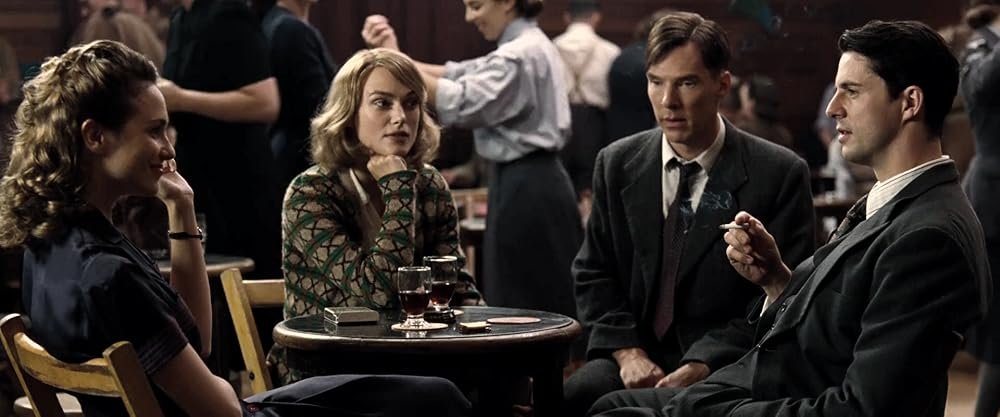
The film that first established Tuppence Middleton as a performer of genuine international stature was The Imitation Game (2014) — Morten Tyldum’s historical drama about Alan Turing’s wartime codebreaking work at Bletchley Park, starring Benedict Cumberbatch as Turing and Keira Knightley as his fellow mathematician and friend Joan Clarke. The film received eight Academy Award nominations including Best Picture and won the Oscar for Best Adapted Screenplay.
She appeared in a supporting capacity in an ensemble that also included Matthew Goode, Allen Leech, Mark Strong, Charles Dance, and Rory Kinnear — a cast list that reads as a comprehensive account of British dramatic talent at its most accomplished. Holding her own within this company, in a film of this prestige and scrutiny, confirmed what the London Evening Standard had suggested four years earlier: that she was not merely promising, but seriously, durably good.
The Imitation Game was also, commercially, the most widely seen film she had appeared in to that point — a crossover success that reached audiences who had never engaged with British independent cinema or the prestige end of the BBC drama slate, and that made her face and her work genuinely internationally familiar in a way that Chatroom and Tormented had not.
Sense8 (2015–2018): Riley Blue and the Global Phenomenon
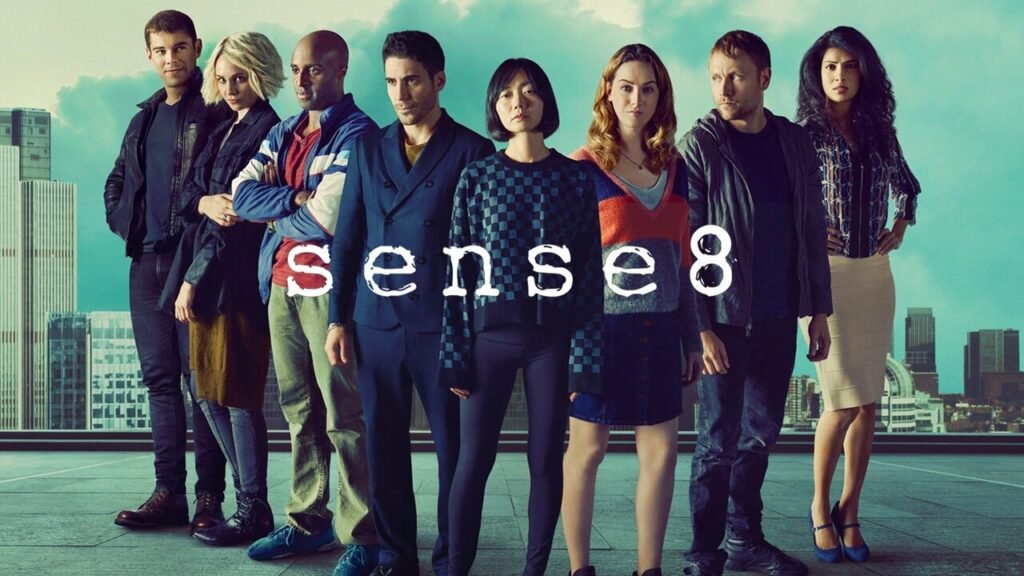
The role that gave Tuppence Middleton her first sustained international television platform was Riley Blue — an Icelandic DJ living in London who becomes part of a group of eight mentally linked strangers spread across the globe — in Sense8, the Netflix original science fiction drama created by Lilly and Lana Wachowski and J. Michael Straczynski.
Sense8 was one of the most ambitious and expensive productions in Netflix’s early original programming era — a show that filmed simultaneously across eight countries on four continents, that assembled a cast representing the genuine international diversity of its characters, and that built its central premise around the idea that profound human connection across difference is not merely possible but is, at some fundamental level, what makes us human. Riley Blue — the Icelandic character whose sensitivity and musical gifts make her one of the cluster’s emotional centres — required Middleton to convey both a specific Icelandic cultural identity and the universal quality of someone whose pain has made her both vulnerable and deeply attuned to the pain of others.
She starred in the show’s two full seasons (2015 and 2017) and the 2018 finale special, accumulating a substantial body of work within a production that, despite its eventual cancellation by Netflix, generated one of the most devoted and passionate fanbases in streaming television history. The Sense8 audience was global, intensely engaged, and deeply invested in the characters — and Riley Blue was consistently one of the most beloved of the cluster’s eight members.
Dickensian and War & Peace: The Period Drama Queen
The year 2015 brought what is, in retrospect, a remarkable coincidence of timing. Tuppence Middleton appeared simultaneously in two major British period dramas — both airing on the BBC, both demanding very different things from her — that together established her as one of the most authoritative period drama performers of her generation.
In Dickensian — the BBC drama that brought together characters from across Charles Dickens’s novels into a single interconnected story set in a Victorian London neighbourhood — she played Miss Havisham, the iconic jilted bride from Great Expectations who has spent decades frozen in the moment of her abandonment, her wedding dress still on, the clocks stopped at the moment of her humiliation. Playing Miss Havisham is one of British drama’s most visible and most scrutinised challenges — a character so embedded in the cultural imagination that every new actress who takes her on is immediately measured against every previous portrayal. Middleton brought to the role a younger, more psychologically complex Havisham than audiences were accustomed to — a woman whose eccentricity is clearly rooted in genuine trauma rather than simple madness.
Then came War & Peace (2016) — Andrew Davies’s six-part BBC adaptation of Tolstoy’s epic novel, starring Paul Dano, Lily James, and James Norton. Middleton played Princess Hélène Kuragina — described by Andrew Davies himself as the naughtiest woman on television at the moment — a Russian aristocrat of extraordinary beauty and absolute moral ruthlessness, whose manipulation of Pierre Bezukhov and her incestuous relationship with her brother make her one of literature’s most deliciously villainous creations. Playing someone this openly, flamboyantly wicked required a specific quality of commitment — the willingness to inhabit moral darkness with genuine relish rather than apologetic distance — and Middleton delivered it with total command.
Jupiter Ascending, Trance, and the Film Career
Alongside her television work, Tuppence Middleton built a film career that took her from British independent cinema into some of Hollywood’s most ambitious productions.
| Year | Film | Director / Cast / Notes |
| 2009 | Tormented | British horror-comedy; film debut |
| 2010 | Chatroom | Hideo Nakata; Aaron Johnson |
| 2010 | Skeletons | British fantasy |
| 2012 | Cleanskin | Sean Bean; terrorism thriller |
| 2013 | Trance | Danny Boyle; James McAvoy, Rosario Dawson |
| 2013 | The Lady Vanishes | ITV film; lead role |
| 2014 | The Imitation Game | Benedict Cumberbatch; 8 Oscar nominations incl. Best Picture |
| 2015 | Jupiter Ascending | Wachowski siblings; Channing Tatum, Mila Kunis |
| 2015 | Spooks: The Greater Good | Peter Firth; action thriller |
| 2018 | Red Joan | Judi Dench; spy drama |
| 2019 | Downton Abbey | Julian Fellowes; Lucy Smith |
| 2020 | Possessor | Brandon Cronenberg; psychological horror |
| 2020 | The Defeated (Shadowplay) | Netflix; period crime drama |
| 2020 | Mank | David Fincher; Gary Oldman |
| 2022 | Downton Abbey: A New Era | Julian Fellowes; reprises Lucy Smith |
| 2022 | Our House | ITV; Martin Compston |
| 2023 | Lord of Misrule | William Brent Bell; Ralph Ineson |
Trance (2013) — Danny Boyle’s psychological heist thriller starring James McAvoy, Rosario Dawson, and Vincent Cassel — gave her a role in a major British film production with one of the country’s most acclaimed directors. Mank (2020) — David Fincher’s biographical drama about screenwriter Herman J. Mankiewicz and the creation of Citizen Kane, starring Gary Oldman and Amanda Seyfried — placed her in one of the most critically prestigious American productions of that year. She played Sara Mankiewicz, the wife of the film’s central figure, in a role that required the understated presence and historical specificity that Fincher’s rigorous filmmaking demands.
The Downton Abbey film (2019) and its sequel A New Era (2022) gave her one of her most commercially successful film presences — playing Lucy Smith, a new character written specifically for the films by creator Julian Fellowes, in productions that collectively earned over $250 million worldwide and introduced her to the enormous global Downton audience.
Possessor (2020) — Brandon Cronenberg’s viscerally disturbing psychological science fiction horror film — demonstrated a willingness to inhabit genuinely dark, uncomfortable material with total commitment, working with the son of David Cronenberg in a production whose body horror intensity placed it firmly at the most challenging end of the genre.
OCD, Emetophobia, and Speaking Openly
One of the most important things Tuppence Middleton has done in her public life is speak openly and with genuine specificity about living with obsessive-compulsive disorder — a condition she developed at the age of twelve, and which has remained part of her daily experience throughout her professional career.
In 2021, she conducted a series of interviews on the subject for BBC Radio 4, speaking with a clinical psychologist and with others who live with the disorder. She has described her specific experience of OCD in terms that are genuinely illuminating: self-imposed routines that sometimes prevent her from leaving the house, obsessive mental counting, and compulsive checking behaviours. She has also spoken about emetophobia — a fear of vomiting — that interacts with her OCD to create an excessive preoccupation with cleanliness.
The decision to speak about these conditions publicly, with clinical specificity rather than vague reference, is both personally courageous and socially significant. OCD is a condition that is widely misunderstood and frequently trivialised in popular culture — reduced to jokes about tidiness or perfectionism that bear no relationship to the genuine distress of the disorder as experienced by those who live with it. Middleton’s willingness to describe her actual experience, in a format as publicly accessible as BBC Radio 4, has contributed meaningfully to more accurate public understanding.
She has denied, with evident amusement, persistent rumours that she is related to Catherine, Princess of Wales. The shared surname is coincidental.
The Forsytes (2025): Frances Forsyte and the Most Prestigious Ensemble of Her Career
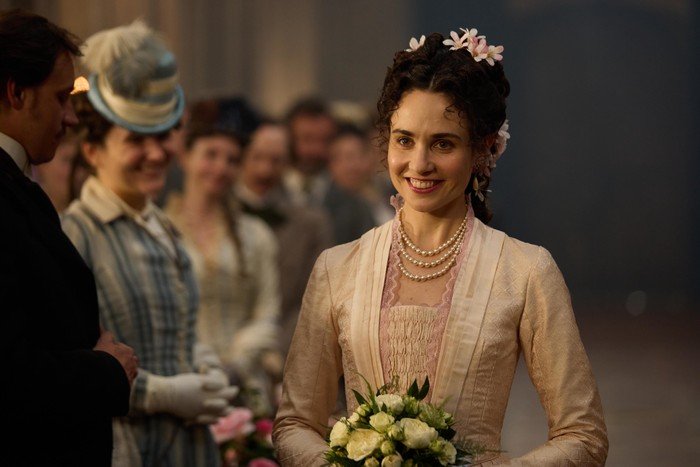
The role that places Tuppence Middleton in the most distinguished and most lavish context of her professional career is Frances Forsyte in The Forsytes — the six-part period drama adaptation of John Galsworthy’s Nobel Prize-winning Forsyte Saga novels, produced by Mammoth Screen for Channel 5 and PBS Masterpiece, written by Poldark screenwriter Debbie Horsfield.
The Forsytes premiered on Channel 5 in the United Kingdom on October 20, 2025, and is scheduled for its American premiere on PBS Masterpiece on March 22, 2026. A second season was commissioned before the first had even aired — an extraordinary vote of confidence in the production’s quality.
Frances Forsyte exists within the complex social and familial dynamics of the wealthy Forsyte family — a clan whose obsession with property, propriety, and social position defines the world of Galsworthy’s saga. The character gave Middleton the opportunity to bring her period drama expertise, developed across Dickensian, War & Peace, and the Downton Abbey films, to the most literarily significant adaptation she has yet been part of — Galsworthy’s novels earned their author the Nobel Prize for Literature in 1932, and the story of the Forsyte family remains one of the central monuments of English fiction.
She joined an ensemble of extraordinary distinction:
| Cast Member | Role | Known For |
| Francesca Annis | Ann Forsyte | Flesh and Blood, Lillie |
| Stephen Moyer | Jolyon Forsyte Sr. | True Blood, The Gifted |
| Jack Davenport | James Forsyte | The Morning Show, Ten Percent |
| Danny Griffin | Jo Forsyte Jr. | Fate: The Winx Saga |
| Tuppence Middleton | Frances Forsyte | Sense8, Downton Abbey, War & Peace |
| Eleanor Tomlinson | Louisa Byrne | Poldark, One Day |
| Joshua Orpin | Soames Forsyte | Titans (HBO Max) |
| Millie Gibson | Irene Heron | Doctor Who, Coronation Street |
| Jamie Flatters | Philip Bosinney | Avatar: The Way of Water |
| Josette Simon OBE | Mrs. Ellen Parker Barrington | Anatomy of a Scandal |
| Susan Hampshire OBE | Lady Carteret | Original 1967 BBC Forsyte Saga |
| Tom Durant-Pritchard | Monty Dartie | Baby Reindeer |
The presence of Susan Hampshire — who appeared in the landmark 1967 BBC Forsyte Saga — creates a generational bridge within the production that is almost certainly unique in British period drama: an actress from the original adaptation sharing scenes with performers in the new one. For Middleton, whose career has been defined by her engagement with the British television period drama tradition at its most demanding, appearing in a production that contains this kind of direct historical continuity is a particularly meaningful professional moment.
Theatre: The Living Room and The One
One dimension of Tuppence Middleton’s professional life that her screen work sometimes overshadows is her sustained engagement with stage work. She made her professional theatre debut in 2013 with The Living Room — Graham Greene’s 1953 play about a young woman’s affair with a married man, performed at the Garrick Theatre in London’s West End. The play is a serious, morally complex piece of religious and romantic drama, and making a West End debut in it — rather than in something more commercially straightforward — was a characteristic choice that prioritised artistic substance over promotional convenience.
In 2018 she returned to the stage with The One — a new play by Vicky Jones (the playwright and creative partner of Fleabag creator Phoebe Waller-Bridge) at the Soho Theatre in London. The Soho Theatre is one of London’s most respected venues for new writing, and working with Vicky Jones — whose work shares the incisive, uncomfortable quality of Waller-Bridge’s own output — gave Middleton an opportunity to operate at the forefront of contemporary British playwriting rather than simply the classical tradition.
What the Career of Tuppence Middleton Demonstrates
Looked at as a whole, the career of Tuppence Middleton is a demonstration of something that the most sustained and most interesting acting careers consistently demonstrate: that genuine range is not about doing many different things, but about bringing total commitment and technical precision to each of them, however different they are from one another.
She has played a Victorian spinster frozen in betrayal. She has played a Russian aristocrat of breathtaking moral cynicism. She has played a Icelandic DJ at the centre of a global science fiction conspiracy. She has played the wife of the co-writer of Citizen Kane. She has played a character in a Wachowski siblings science fiction epic. She has played the female lead of Downton Abbey’s theatrical extensions. She has played a character within a psychological horror film by David Cronenberg’s son. And now she has brought all of that accumulated technical depth and period drama authority to bear on a Galsworthy adaptation of Nobel Prize-winning fiction in one of the most distinguished British television ensembles of the decade.
That is, by any reasonable measure, an extraordinary body of work for a woman who is still only thirty-eight years old and whose career has every indication of continuing to grow in exactly this direction — serious, ambitious, and consistently better than the profile she maintains would lead you to expect.
Complete Career Timeline
| Year | Milestone |
| February 21, 1987 | Born in Bristol; raised in Clevedon, Somerset |
| ~2000s | Attends Bristol Grammar School; performs in Guys and Dolls; trains at Stagecoach, Portishead |
| ~2005–2008 | Studies acting at Arts Educational School, Chiswick, London — BA Hons Acting |
| 2008 | Professional debut in Bones (Fox) |
| 2009 | First film role in Tormented; appears in Chatroom (Hideo Nakata) |
| 2010 | London Evening Standard Most Promising Newcomer nomination; Skeletons |
| 2011 | Friday Night Dinner (Channel 4) — Tanya Greene; Sirens (Channel 4) |
| 2012 | Cleanskin (Sean Bean); Spies of Warsaw (BBC, David Tennant) |
| 2013 | Black Mirror — White Bear (Channel 4); Trance (Danny Boyle); professional theatre debut in The Living Room (Garrick Theatre) |
| 2014 | The Imitation Game — Benedict Cumberbatch; 8 Oscar nominations incl. Best Picture |
| 2015 | Sense8 Season 1 premieres (Netflix) — Riley Blue; Dickensian — Miss Havisham (BBC); Jupiter Ascending (Wachowskis); Spooks: The Greater Good |
| 2016 | War & Peace (BBC) — Princess Hélène Kuragina (Andrew Davies adaptation) |
| 2017 | Sense8 Season 2; Philip K. Dick’s Electric Dreams (Channel 4) |
| 2018 | The One at Soho Theatre (Vicky Jones play); Red Joan (Judi Dench) |
| 2018 | Sense8 finale special |
| 2019 | Downton Abbey (film) — Lucy Smith; first appearance in Fellowes franchise |
| 2020 | Possessor (Brandon Cronenberg); Mank (David Fincher); The Defeated / Shadowplay (Netflix) |
| 2021 | BBC Radio 4 interviews on OCD; narrates BBC World Service documentaries |
| 2022 | Downton Abbey: A New Era — reprises Lucy Smith; Our House (ITV, Martin Compston) |
| 2023 | Lord of Misrule (William Brent Bell, Ralph Ineson) |
| 2025 | Frances Forsyte in The Forsytes (Channel 5 / PBS Masterpiece) |
| October 20, 2025 | The Forsytes premieres on Channel 5, UK |
| March 22, 2026 | The Forsytes premieres on PBS Masterpiece, USA |
| 2025–ongoing | The Forsytes Season 2 in production |