
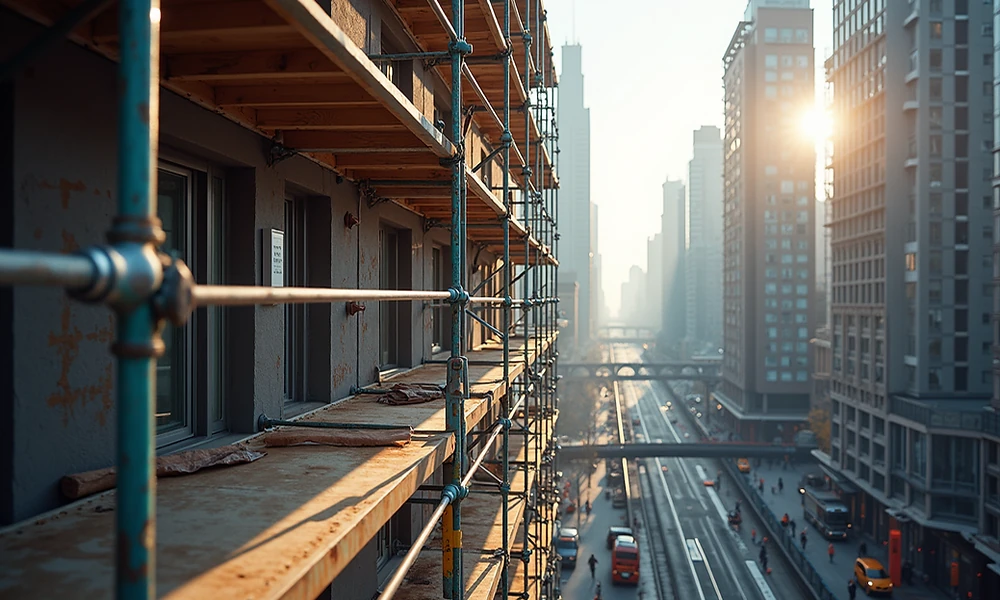
Crane booms silhouetted against a city skyline are only possible because the unseen support beneath them holds strong, day after day. In the world of construction, temporary support structures are the silent sentinels that make ambitious projects feasible. But as buildings reach higher and infrastructure becomes ever more complex, the demands on these temporary systems have never been greater.
Challenges in Temporary Support Structures for Construction
Temporary supports are the backbone of any active jobsite, but they come with a unique set of challenges. When a support system falters, schedules slide, costs spiral, and safety becomes a gamble no contractor wants to take.
Common Risks and Failures on Construction Sites
From shifting soil to unpredictable weather, construction sites are a breeding ground for complications. Supports may buckle if the load calculations are off by even a small margin. Inadequate bracing can trigger cascading failures, while poor coordination between teams introduces dangerous blind spots. These risks make innovative thinking essential, not optional.
Limitations of Traditional Temporary Structures
Relying on conventional scaffolding or shoring means working within the bounds of standardized, one-size-fits-all solutions. Such systems often lack the flexibility needed for unique site conditions or architecturally daring projects. Worse, older materials may weaken over time, and standard configurations can become a liability when construction parameters change unexpectedly.
Impact of Inefficient Temporary Supports on Project Timelines and Budgets
A support system that is merely “good enough” rarely is. Delays linked to redesigns or emergency reinforcements can inflate budgets by thousands, or millions, of dollars. The domino effect touches every stakeholder, from project managers to end clients, making efficiency in temporary structures a critical lever for profitability.
Innovations Transforming Temporary Support Systems
The construction industry has responded with a new generation of solutions designed to address the limitations of the past, seamlessly blending scientific rigor with practical ingenuity.
Advanced Materials Enhancing Strength and Flexibility
Recent years have seen a leap in material science. High-strength alloys, lightweight composites, and modular aluminum frames now outperform traditional steel and wood. These materials not only support heavier loads but also accelerate site assembly and disassembly.
Modular and Customizable Design Solutions
Forget about rigid, off-the-shelf systems. Leading firms engineer adaptable supports that can be tailored to irregular floorplans, tight urban sites, or projects with evolving requirements. Adjustable jacks, telescopic beams, and snap-fit connectors mean structures can be customized rapidly, while also boosting safety and efficiency.
Integration of Digital Tools and Structural Engineering Software
Digitalization has revolutionized planning. Structural software now models precise load paths and simulates worst-case scenarios, allowing for preemptive optimization. This reduces trial-and-error on site, streamlining both the design and installation phases.
Case Studies: Successful Implementation of Innovative Supports
Innovation isn’t just theory, it’s thriving in the field.
Complex Multi-Story Building Projects
On high-rise sites, modular exoskeleton supports have enabled construction to proceed without halting adjacent operations. These adaptable solutions allow for floor-by-floor adjustments, saving weeks on the timeline.
Large-Scale Infrastructure: Bridges and Viaducts
Mega-projects like city viaducts and river crossings depend on temporary supports that adapt to shifting environmental conditions and massive dynamic loads. Teams have turned to custom-fabricated supports and digital monitoring to keep these projects on track despite daunting variables.
Emergency and Rapid Deployment Scenarios
When disaster strikes or timelines are compressed, rapid-deploying support systems prove their worth. Pre-engineered kits can be shipped and installed in days rather than weeks, ensuring safety and continuity even under pressure.
Collaborative Engineering and Equipment Provision Models
The best results rarely come from silos. Instead, integrated teams of engineers and equipment suppliers are redefining what’s possible on site.
The Role of Integrated Engineering and Equipment Suppliers
When engineering design and equipment provision work hand in hand, miscommunication fades and synergy takes its place. Firms such as NadeauSDM ingénieur civil structure exemplify this holistic approach, bridging expertise in both creative design and sourcing the right equipment, free from brand dependencies.
Benefits of Hybrid Solutions Combining Design and Supply
This model eliminates the lag between concept and reality. Clients benefit from solutions tailored precisely to their needs, with coordination extending from the drawing board to the final bolt.
Coordination Strategies for Seamless On-Site Execution
Collaborative workflows ensure every stakeholder, engineer, contractor, supplier, is aligned from start to finish. Detailed project kickoffs, shared digital platforms, and proactive troubleshooting form the backbone of these efficient teams.
Ensuring Safety and Quality Through Smart Project Management
Innovation without control quickly turns risky. That’s why disciplined project management is the unsung hero of successful temporary support systems.
Early-Stage Risk Assessment and Creative Solution Pathways
Top teams begin by mapping out both the known hazards and the unknowable surprises. Brainstorming creative pathways at this stage can unearth solutions that traditional analysis might miss.
Onsite Monitoring, Support, and Quality Assurance
Constant monitoring, sometimes using smart sensors and real-time data, ensures supports perform as designed. Ongoing guidance from engineering experts means that any issues are caught before they escalate.
Budget Control via Optimized Temporary Structure Planning
Strategic planning, including material choice and logistical sequencing, keeps budgets in check. Value comes from both initial design and ongoing management, preventing costly overruns.
Steps to Adopt Innovative Temporary Support Solutions
Ready to move beyond the status quo? Here’s how construction firms are successfully embracing new support systems:
– Assess the unique requirements and constraints of the project site.
– Engage experienced engineering partners at the earliest conceptual stages.
– Select equipment and solutions tailored to both current tasks and anticipated challenges.
– Develop a logistics plan for equipment delivery, onsite integration, and adaptive schedule management.
Future Trends in Temporary Support Structures
Where is the industry heading? Three trends stand out.
Emerging Technologies and Materials on the Horizon
Self-monitoring materials, 3D-printed support elements, and AI-powered design tools are pushing boundaries. These advances promise even greater safety and adaptability.
Sustainability and Environmental Considerations
Eco-friendly materials and systems designed for reuse or recycling are gaining traction, reducing the environmental footprint of large-scale construction.
Evolving Standards and Regulatory Impacts
Codes and standards are catching up to innovation, mandating ever-higher benchmarks for safety, efficiency, and sustainability. The leaders of tomorrow will be those who anticipate and exceed these evolving expectations.
Temporary support structures may be temporary by name, but the innovation driving them will leave a lasting mark on the built world.